Monday, October 29, 2018

Google Working on Solving the Pain Points in Vacation Package Shopping

For anyone who’s ever shopped online for a vacation package where the flight and hotel are bundled together, you’ll know it can be a tedious exercise.

First you might find a holiday package on Expedia, for example, and then you’ll have to figure out at least two things: Is it cheaper to book the package versus buying the flight and hotel separately, and then you’ll want to search to see whether another vendor, such as Virgin Vacations, has a better deal.

The process can be frustrating because there are a lot of variables, and the rates change frequently, too.

Enter Google, which has been testing vacation rental metasearch, where users are transferred to third parties for bookings in the UK and Germany within its Destinations category since the spring of 2017.

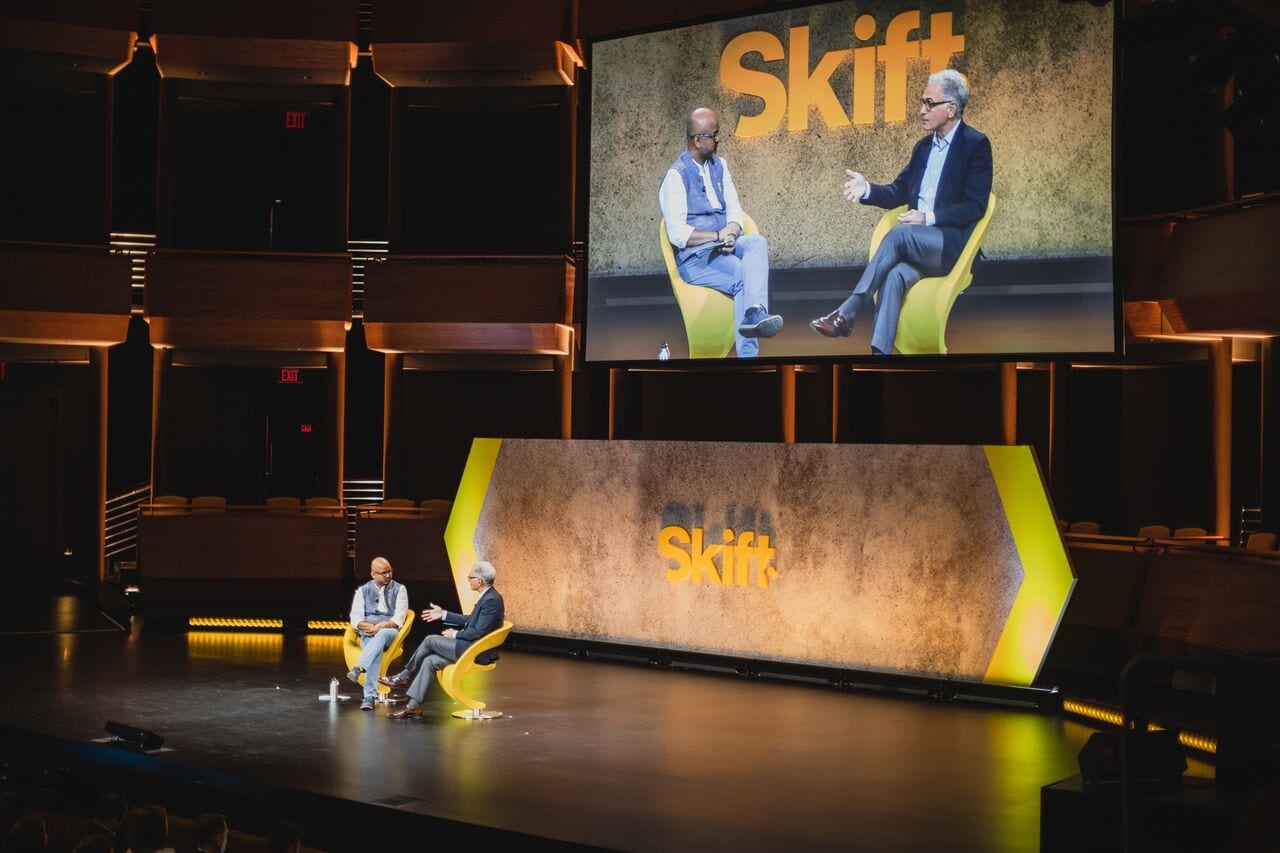
Speaking at Skift Global Forum last month, Richard Holden, Google’s vice president of product for travel, said that effort will be expanding in a number of ways.

“We do offer it now in the UK, Germany and the U.S.,” Holden said.  “I would still say that it’s not prominent in its display at the moment; it’s fairly buried in the destinations experience. The next version of this we’re working on at the moment to make it more prominent and Germany is actually probably the first market that we’re most focused on simply because Germany is a very large package travel market as a whole.”

Skift has seen the product on Google in a number of forms: on desktop in the Destinations  section and in the Travel Guide category, and at the very top of the page under Destinations in Google Germany or further down underneath paid ads in Google U.S. desktop.

But, the vacation package search product, which is likewise on mobile, is indeed becoming more prominent, although it is far from perfected, as can be expected with such a complex feature. But Google is already addressing some of the pain points in vacation package search, albeit in a rudimentary way so far.

Holden explained Google’s thinking.

“But we still think this is a great opportunity from a transparency standpoint,” Holden said. “Users just don’t know where to find this data. There is no great place to go to understand all the packages that are offered out there and from a transparency standpoint, we’re also trying to show people what that package travel would look like and what the component pricing looks like so they can compare right there.”

On mobile in the U.S., we entered Germany vacation packages on Google and found 102 options for trips to Berlin, for example, along with a widget to refine dates and destinations, as well as maps, amenity descriptions, photos, ratings, and reviews.

An Expedia vacation package for a Wow Air flight and a 3-night stay at the Sofitel Berlin Kurfürstendamm shown on Google.

For Berlin, we found several Expedia flight and hotel packages, including those for a Sofitel Berlin Kurfürstendamm-Wow Air three-night package from New York City in early November for $1,175 per person; a Park Inn by Radisson Berlin-Wow Air package for $1,061; and Steigenberger Hotel Berlin-Wow Air package for $1,157.

Along with each Expedia package price, Google listed the price for booking the flight and hotel separately from Wow Air and Agodo or Priceline, for example.

The main value proposition in packages is the traveler is supposed to get a considerable discount because the airlines and hotels can fill seats or beds without disclosing the pricing on the individual components because the traveler only sees the package price. The hotel or airline therefore can offer discounts without diluting their published rates.

Ironically, though, the differences in the package prices and those when someone books the individual components separately that we saw on Google were not very large, sometimes nonexistent. For example, the Expedia package for the Sofitel Berlin Kurfürstendamm-Wow Air package was $1,175 versus $1,173 when the flight would be booked on Wow Air and the hotel on Priceline.com.

As noted, Google’s vacation package search is very much a work in process. We’d expect in the future to find considerable discounts for vacation package prices versus booking the flights and hotels separately.

But Google will work out the kinks, and the ability to compare holiday packages from vendor to vendor, and also to determine the discount versus individual components one one place will be a compelling premise since there aren’t many easy ways to do that today.

In other news, Holden said Google is now offering a way for consumers to search for vacation rentals outside the United States in major metropolitan areas.

“We struggled for a little while as to what’s the right way to integrate those offerings,” with hotels, Holden said. “We are actually offering it now outside the U.S. as a filter in hotel search in major metropolitan areas. There’s content that you can filter in to see alternative lodging or vacation rental content. Typically today, the content that we have there is apartment-like, it’s most hotel-like properties, though we will be in the near future moving into a broader set of properties as well. We think it’s hugely relevant.”

Photo Credit: Beach-goers enjoyed the sands at the Jersey shore in New Jersey after Hurricane Sandy. Wayne Parry / Wayne Parry


from Skift https://ift.tt/2NHxiRr
via IFTTT

Fighting Biz Travel Burnout

How much business travel is too much for the seasoned road warrior? Well, the evidence shows it’s less the frequency of travel than the travel experience itself that leads to botched meetings and self-destructive behavior.

This week I explored a report polling road warriors on what is ruining their lives. Balancing work and life remains a major hurdle, although the elements that improve a business trip aren’t too hard to predict: More sleep and more comfortable flights lead the pack.

There is also evidence that pushing business travelers too hard is leading them to leave their jobs for something requiring less soul-crushing travel that distances them from their families and leads to gluttonous In-N-Out Burger binges (just speaking from recent experience here).

We’ve also got the latest on how U.S. airlines are jacking up fares to outrun rising fuel prices, courtesy of Senior Aviation Business Editor Brian Sumers. Could the recent era of low fares driven by competition be coming to a close? Looks like it, although the airlines have complex arbitrage methods to deal with fluctuations in fuel prices.

If you have any feedback about the newsletter or news tips, feel free to reach out via email at as@skift.com or tweet me @sheivach.

— Andrew Sheivachman, Senior Editor

Airlines, Hotels, and Innovation

Frequent Business Travelers Need More Sleep to Survive: I’m tired, you’re tired, we’re all tired when we travel for work. It’s leading employees to burn out and quit, causing problems for travel managers and companies that push their workers too hard. Some sleep and nicer flights can help.

Group Booking Pace Slows in Tight Market for Meetings: New research from Cvent shows that group business is declining for U.S. hotels, and planners are booking room blocks closer to the date of their event than before. This is bad news for hotels, which rely on group bookings to boost business.

Delta Air Lines Sees Premium Profit: Travelers hoping for more free first-class upgrades should probably root for a recession. The economy is too strong for airlines to give away their best seats for free.

United Airlines Avoids Fuel Cost Hit to Earnings With Higher Ticket Prices: We told you United would probably turn things around on finances when it hired revenue whiz Scott Kirby back in August 2016. And look what’s happening. Now, it’s time for the airline to improve its customer service, too.

The Future of Travel

Cvent Buys Social Tables as Event Tech Consolidation Escalates: Cvent is working methodically to expand its offerings in the small meeting space by acquiring Kapow and now Social Tables. Social Tables found success streamlining obvious pain points for planners, which is something Cvent can learn from.

Measuring the Value of Wellness to a Hotel Brand: Every time you turn around these days, a major hotel company is announcing that it has hired a chief wellness officer. But will this wave of devotion to wellness be a phase or a long-lasting phenomenon? Look to the return on investment for that answer.

The TSA Plans to Use More Biometrics at Airport Security Checkpoints: We hear good things about the reliability of facial scans at airports with one exception. JetBlue Airways reports that the system in place at its terminals is not as effective with the oldest travelers as it is with everyone else.

SUBSCRIBE

Skift Senior Editor Andrew Sheivachman [as@skift.com] curates the Skift Corporate Travel Innovation Report. Skift emails the newsletter every Thursday.

Subscribe to Skift’s Free Corporate Travel Innovation Report

Photo Credit: In this March 17, 2016, file photo, travelers wait in line for security screening at Seattle-Tacoma International Airport in Seattle. Ted S. Warren / Associated Press


from Skift https://ift.tt/2Euampe
via IFTTT

Skift Global Forum 2018 Recap: Humanizing the Travel Experience Is Key to Building Loyalty


Get the report

Nearly 30 speakers took the stage at last month’s Skift Global Forum to discuss the leading trends and innovations top of mind for the people defining the future of the global travel industry.

Perhaps unsurprisingly, investment in technology to improve both product offerings and customer insight was cited as one of the major themes by industry speakers throughout this year’s conference. Delta Air Lines CEO Ed Bastian declared that free Wi-Fi would (eventually) be available on board. Christine Duffy, president of Carnival Cruise Line, touted the company’s Ocean Medallion technology, which provides passengers with a personalized cruise experience through a wearable wristband. And TripAdvisor CEO Steve Kaufer spoke about the company’s push for more curated recommendations to the individual, just to name a few examples.

However, many speakers added an asterisk to the increasing presence of technology in travel, cautioning that prioritizing the human element is critical to truly connect with customers. Joanna Geraghty, president and chief operating officer of JetBlue Airways explained that the airline was founded on the idea of “bringing humanity back to air travel” when it was launched 18 years ago. She further explained that individual employees are often mentioned by name when customers leave positive reviews about their JetBlue experience.

Mark Hoplamazian, CEO of Hyatt, discussed how the company is evolving its vision to facilitate mindfulness and wellbeing, both on and off property, allowing its customers to “fulfill the purpose of being their best selves,” through its FIND platform and hiring of a chief wellness officer. Meanwhile, Jack Ezon, founder and managing partner of Embark, and Matthew Upchurch, CEO of Virtuoso, discussed the strong future ahead for luxury travel advisers, despite advances in technology. “Agents who were like human vending machines have gone away, and the ones that focused on providing value have thrived,” said Upchurch.

Ian Schrager, founder of the Morgans Hotel Group and pioneer of the boutique hotel movement in the United States perhaps spoke most candidly about how customer experience can often get overlooked due to the fancy bells and whistles that come with new technologies. “I think technology is the future –– but not mood boards in the lobby or iPads in every room…” He explained that hotel companies need to remember that they’re in the hospitality business and that the guest experience needs to include “something that astonishes people” with added “excitement” and “glamor.”

Hermès, a leader in the luxury retail sector, also understands the importance of human connection. Robert Chavez, Hermès’ president and CEO for the Americas, explained how the company still does much of its business in-person. Face-to-face communication and impeccable service with customers is so important for the retailer that Hermès doesn’t hire applicants who aren’t naturally inclined to connect and engage. “You can’t teach someone how to smile,” said Chavez. And each store has slightly different inventory, chosen by the store’s director, who flies to Paris a couple of times per year to choose products catered to its particular clientele.

While technology enables truly great and seamless travel experiences, technology itself is a means, not an end. Connecting with travelers on a human level is the piece that will truly differentiate good brands from great brands. Delivering memorable, emotional experiences is the best way to foster long-term loyalty among travelers and stand out in a market that’s constantly innovating.

Olson 1to1 provides loyalty technology, strategy, creative, analytics, and program management for some of the most well-known hotel and travel brands. Our mission is to help clients build meaningful, lasting, and mutually beneficial relationships with their customers, with an emphasis on infusing humanity into the experience. To learn more, download the report.

Get the report

This content was created collaboratively by Olson 1to1 and Skift’s branded content studio, SkiftX.

Photo Credit: Hyatt, CEO Mark Hoplamazian with Rafat Ali of Skift at Skift Global Forum 2018


from Skift https://ift.tt/2q2WxnT
via IFTTT

How Travel Marketers Can Make the Most of Global Cultural Events


Global events influence travel trends around the world, regardless of whether they’re planned or spontaneous, positive or negative. Huge crowds of travelers pass in and out of host cities, giving hoteliers good reason to capitalize on their habits and activities.

But an event’s popularity is not the only factor that impacts the resulting tourist habits in those cities –– any number of unpredictable details leading up to those events can influence travel trends. And if travelers are planning ahead, travel marketers should be too.

Koddi, a cloud-based marketing technology company for travel brands, developed a recent study to see how some of the past year’s largest global events impacted tourism trends around the world.

The 2018 Travel Index looked at booking windows, attendance rates, weather events, and generational trends of events, ranging from the Women’s March in Washington, D.C. to the FIFA World Cup in Moscow, to determine how travel marketers can effectively build global events into their overall business strategies. Here, we look at a few takeaways from the study.

Let’s Play Ball: International event ticketing forces sports fans to plan ahead
Cities clamor to host sporting sensations, such as the FIFA World Cup and the Summer and Winter Olympics, hoping that highly-televised international attention will boost tourism and improve their public reputations on a global scale. And millions of sports fans often snatch up limited ticket releases and secure their accommodations during the same booking windows.

Most sporting events result in booking windows an average of 43 days ahead of the events themselves. But exceptions do occur when tickets are released outside of that window. For example, ticket lotteries for the 2018 FIFA World Cup in Moscow were released 90, 60, and 30 days before the World Cup actually took place. Corresponding booking spikes took place at each of those markers, suggesting that as fans scored event tickets, they turned their attention immediately to their accommodation needs. Savvy travel marketers also adjusted their campaign budgets to capitalize on this trend by initially dialing up ad spend 90 days prior to the events and, in the case of the World Cup Tournament, increased their ad spend by nearly 350 percent in the 30 days leading up to the first game.

Marching Orders: Grassroots political rallies leave little time to plan
Whereas sporting fans tend to book their accommodations in advance, travelers attending large-scale cultural events like political rallies are often considerably more impulsive. Rallies like the 2017 Women’s March and the 2018 March for Our Lives in Washington, D.C. were attended by millions, but no advance ticket sales were required for people to participate.

Booking windows for political rallies average 35 days, largely due to the grassroots nature of such events. Social activism arises in response to the local political climate, and ralliers who believe in the cause of a march show up in droves with hardly any advance notice.

Besides investing in campaigns with shorter booking windows, travel marketers should also consider optimizing their campaigns for mobile with ad spend going to in-app and social. Due to the shorter booking windows, many travelers are making their last-minute hotel reservations via their smartphones.

The Beat Goes On: Music festival-goers save hotel bookings for last
Ticket sales for music festivals around the world go on sale months ahead of time, and in some cases, are even released an entire year in advance. However, although festival travelers book their tickets well in advance, they don’t seem to book their lodging until much later. Most festival host cities don’t experience a spike in booking windows until four to six weeks before the actual event.

This timing disparity between buying tickets and booking hotels may be attributed to the fact that many music festivals are hosted in already popular tourist destinations, like the Rock in Rio festival in Rio de Janeiro and Coachella in sunny California. Another factor in later stage booking windows may be the availability of alternative accommodation options with competitive rates, like Airbnb and HomeAway.

Again, optimizing campaigns for mobile devices –– especially with spend on social media channels –– becomes increasingly important for increasing booking volume among music festival-goers.

Expect The Unexpected: What it takes to weatherproof your travel strategy
Unfortunately, destinations around the world that have been devastated by natural disasters and inclement weather events, like hurricanes and earthquakes, have seen real losses in tourism bookings over time. Hurricane Maria caused a 40 percent bookings decrease in Puerto Rico in 2017 –– and that’s on top of the immense property damage and loss from which the region is still recovering. Indonesia was recently struck with two earthquakes ranking 6 and higher on the Richter scale and suffered a 26 percent bookings decrease as a result.

But surprisingly, dramatic weather phenomena can also spark modest increases in bookings in the periods immediately following those events. For example, Houston experienced a 5 percent increase in hotel bookings during 2017’s Hurricane Harvey. These last-minute booking spikes are often influenced by evacuation orders that force residents from their homes and by the influx of volunteer workers and first responders who flock to affected cities to help with disaster recovery.

Actionable Takeaways for Travel Marketers
Events ranging from the musical to the athletic and the political to the meteorological can all trigger spikes in the popularity of the cities where they take place. To stay aligned with the needs of travelers and spend on advertising wisely, travel marketers should:

  • Plan on increased volume from cultural events in popular tourism destinations
  • Budget for visibility during the primary ticketing periods for major sporting events
  • Focus on last-minute booking services for music festivals and political rallies
  • Adjust ad spend if property is damaged by an unexpected natural disaster
  • Make sure campaigns are optimized for mobile, as many last minute bookings are made via smartphone

Of course, spikes in bookings and popularity often come with corresponding lulls. As long as travel marketers plan with major events in mind and stay nimble in response to the unexpected, global events can actually contribute to overall business strategy instead of knocking those plans off track.

To learn more about Koddi’s 2018 Travel Index and see what Koddi can do for your travel business’ advertising and metasearch optimization, click here.

This content was created in collaboration with Koddi and published by Skift’s branded content studio, SkiftX.


from Skift https://ift.tt/2S6NzCN
via IFTTT

Hilton Debuts New Hostel-Inspired Brand, Motto

Hilton’s newest brand, its 16th overall, following the addition of LXR, is an urban microhotel concept called Motto by Hilton.

And while it might not be marketed as a “hostel on steroids,” as Hilton CEO Chris Nassetta described it in September 2017 at Skift Global Forum, it certainly borrows a number of ideas from that category. And it is just one of many new microhotel, or pod-like hotel concepts to be introduced in the past few years.

“We’ve been developing the brand for a year plus, now and spending a lot of time in the hostel segment to understand what’s going on,” Tripp McLaughlin, global head of Motto by Hilton, said in announcing the brand unveiled Tuesday. McLaughlin said Motto was inspired by “the rise of boutique lifestyle hostels” and the fact that that hostels, traditionally, excel at “creating a community vibe” and work better for group travel.

“There is a nugget of truth to what Chris is speaking about,” he added, acknowledging Nassetta’s previous comments. “But with what hostels stand for, we just didn’t feel comfortable about planting our flag in there.”

McLaughlin isn’t alone in this assessment. Generator, a brand that made its mark as Generator Hostels, is also working to drop the “hostels” part of its name.

So, instead of calling it a hostel, Hilton has decided to market Motto as “the most affordable urban lifestyle brand” and an “urban microhotel” with rooms averaging 163 square feet each.

But just how affordable is Motto supposed to be — both for hotel owners and for potential guests?

McLaughlin said it would depend on the market and the individual property, but couldn’t disclose a cost to build per room key, or an average nightly rate. The average room count for a Motto is estimated to be 175 keys What he did note, however, was that this was a brand that would offer hotel owners “flexibility” to invest in the elements that matter most to them. As far as chain scales, or categories go, Motto would be “between midscale and upper midscale.”

In other words, Motto by Hilton be the epitome of “select service” when it comes to the services and amenities that owners want to select. Public areas like the lobby, which will feature a “premium coffeehouse” and a curated bar program, will be essential, but items like alarm clocks will likely disappear from guest rooms.

As for the name, “Motto,” McLaughlin said it came about “because we wanted a name with real world meaning. Motto is a guiding principle for a brand or person, and it’s very inclusive and speaks to a certain time or place, or area. Each Motto will have its own ‘motto’ overall.”

This rendering shows three of the different room types available in the new Motto by Hilton brand. Source: Hilton

The Demand for Tiny Hotel Rooms

Motto by Hilton is just the latest micro hotel brand and/or elevated hostel-like brand to debut in recent years. Predecessors include Marriott’s Moxy, Pod Hotels, Ian Schrager’s Public, Generator, AccorHotels’ Jo&Joe, and Sydell Group’s Freehand.

Demand for these types of hotel brands doesn’t seem to be slowing down anytime soon, either, and for groups like Hilton who see a potential “white space” for a concept like this, they are all the more attractive.

“In major cities where rates are high but there’s year-round leisure travel business, this less expensive but modern and chain-affiliated brand, with perks like loyalty program points, is being viewed as the new white space,” said Bjorn Hanson, clinical professor at the NYU Jonathan M. Tisch Center for Hospitality and Tourism. “A design and theme that appeals to Millennials is where the rapidly growing market is, and many hotel analysts see this as an entry level to brand loyalty, especially when direct booking is so important, and Hilton emphasizes that, perhaps, more than anybody.”

McLaughlin says that while Motto “will likely skew more Millennial, it’s not a brand solely for Millennials.” Instead, it’s for “connected and confident travelers who seek spontaneous moments and are willing to trade off some things in a room experience so they can experience more in location.”

Jay Patel, president and CEO of North Point Hospitality, and a Hilton hotels owner himself, said, “Until microhotels, there weren’t many lodging options available for travelers in the top global destinations, and certainly not affordable options because real estate is always at a premium in the neighborhoods where locals and travelers congregate.”

Not only will brands like Motto and its peers attract more budget-conscious travelers, but they will also appeal to cost-conscious owners and developers looking for brands to attach to newbuilds or adaptive reuse projects.

“To be a Hilton franchisee is a positive,” added Hanson. “The low construction and operating costs are also a plus. Put these together, and it’s just a matter of having enough market and consumer research to indicate there will be an acceptance level of a concept of design like this. I don’t think it will be difficult to attract.”

The appeal of these types of hotels, for groups, can also be seen as the traditional hotel industry’s answer to the sharing economy, or the popularity of private accommodation and vacation rental platforms like Airbnb and HomeAway — an area of accommodations that Nassetta has said he doesn’t see Hilton entering anytime soon, unlike his peers at AccorHotels and Marriott.

“This doesn’t compete directly with the sharing economy, but it provides a closer alternative to it than traditional hotel brands,” said Hanson.

Hilton’s McLaughin admitted, “We sometimes struggle, as a company, to develop product that meets those needs [of group travelers].” But with configurations that make it easy for groups of nine, for example, to travel together, thanks to connecting rooms, some of which even feature bunk beds, Motto offers a solution.

“I own 12 hotels (no hostels) and can only speak to what I see in my industry, but there is clear overlap in what hotel and hostel travelers are looking for,” Patel noted. Patel served on the Motto by Hilton band advisory group of hotel owners, and is also considering opening a Motto in Savannah, Georgia, in the near future.

“The findings of Hilton’s hostel research echoed much of what we, the Motto by Hilton brand advisory group, are hearing from our guests,” he added. “For example, hostel goers and hotel guests want to stay among peers they’re traveling with, and one of our most common requests is for adjoining rooms.”

This room type features a convertible Murphy bed, shown here as closed. Source: Hilton

This is how that same room type appears when the Murphy bed is opened. Source: Hilton

Motto’s Main Features

At Motto by Hilton, there are four room types: a standard room, a corner room, a flexible room with a Murphy bed type set up, and a multi-bedded room with bunk beds.

Hilton is requiring Motto hotel owners to have at least 30 percent of their room inventory to be able to connect to one another, and the company is in the process of working with its guest reservations systems to make sure that guests can confirm connecting rooms at the time of booking.

Another item that Hilton is also working on in relation to Motto is the ability for guests to split payments between more than one person at the time of booking — a payments feature that companies like Airbnb currently offer. McLaughlin said Hilton is currently looking at a variety of different ways to offer split payments, and is considering either a partnership or building the capability internally.

Another mainstay feature of Motto will be the fact that all rooms will feature Hilton’s Internet of Things “Connected Room” concept, allowing guests to control the TV, lighting, temperature, streaming, etc., from their mobile devices if they are Hilton Honors members. At the moment, there are currently 500 rooms in North America that feature that technology.

One signature amenity to be offered by Motto is a “premium sleep experience,” McLaughlin said, noting that hotel owners will be encouraged to invest in the “beds, bed linens, blackout curtains, sound-dampening materials in walls, and any amenities that contribute to sleep.”

A quick glance at early renderings for the brand suggest a more muted color palette of blues and grays — unlike the Tru by Hilton original design concept — but whether the contemporary designs will make Motto stand out from its competitors, or easily accommodate the relatively small spaces they will inhabit, remains to be seen.

There’s no word yet as to when the very first Motto by Hilton will open, but one of the first is expected to open in 2020 in Marleybone, London, and Hilton said it also has deals for new Motto properties in Lima, Dublin, Savannah, San Diego, Boston, and Washington, D.C.

One thing in particular that Hilton wants to emphasize is that Motto is not like its successful midscale Tru by Hilton brand, which was launched in January 2016, and was an instant success, becoming Hilton’s fastest-growing brand in its history with more than 140 signed agreements in just the first year of its debut.

For one thing, McLaughlin, who also worked on the development of the Tru brand, noted, the lobbies for Tru are smaller and the room sizes are also different. The public spaces at Motto by Hilton are known as Motto Commons, and owners are encouraged to work with local partners and designers to develop them to feel more like extensions of the local neighborhood.

“There were some learnings we took from Tru, such as how to design efficiently, and work with consumers and owners from the beginning to get their buy in,” he said.

Given the success of brands like Tru and Hilton Garden Inn, Hanson said, “Hilton excels at the lower price point when it comes to brand launches.”

Hilton isn’t done dreaming up new brands, either. Up next for its newest brands will be a new luxury lifestyle brand, and possibly a “Hilton Plus” brand — not unlike what Starwood attempted to do with “Sheraton Grand.”

As for Patel, he’s looking forward to seeing how the Motto by Hilton brand progresses. “Hilton is excellent at creating brands that are set up for success because the company develops white spaces in the market. There is a strong business case for what Motto by Hilton will offer. I am excited for the autonomy Hilton is giving owners to make Motto by Hilton unique in our respective cities: staffing, amenities, and food-and-beverage programs.”


Photo Credit: A rendering of a Motto by Hilton guest room featuring a queen size bed. Hilton


from Skift https://ift.tt/2PkbqQI
via IFTTT