Monday, October 29, 2018

Hilton Debuts New Hostel-Inspired Brand, Motto

Hilton’s newest brand, its 16th overall, following the addition of LXR, is an urban microhotel concept called Motto by Hilton.

And while it might not be marketed as a “hostel on steroids,” as Hilton CEO Chris Nassetta described it in September 2017 at Skift Global Forum, it certainly borrows a number of ideas from that category. And it is just one of many new microhotel, or pod-like hotel concepts to be introduced in the past few years.

“We’ve been developing the brand for a year plus, now and spending a lot of time in the hostel segment to understand what’s going on,” Tripp McLaughlin, global head of Motto by Hilton, said in announcing the brand unveiled Tuesday. McLaughlin said Motto was inspired by “the rise of boutique lifestyle hostels” and the fact that that hostels, traditionally, excel at “creating a community vibe” and work better for group travel.

“There is a nugget of truth to what Chris is speaking about,” he added, acknowledging Nassetta’s previous comments. “But with what hostels stand for, we just didn’t feel comfortable about planting our flag in there.”

McLaughlin isn’t alone in this assessment. Generator, a brand that made its mark as Generator Hostels, is also working to drop the “hostels” part of its name.

So, instead of calling it a hostel, Hilton has decided to market Motto as “the most affordable urban lifestyle brand” and an “urban microhotel” with rooms averaging 163 square feet each.

But just how affordable is Motto supposed to be — both for hotel owners and for potential guests?

McLaughlin said it would depend on the market and the individual property, but couldn’t disclose a cost to build per room key, or an average nightly rate. The average room count for a Motto is estimated to be 175 keys What he did note, however, was that this was a brand that would offer hotel owners “flexibility” to invest in the elements that matter most to them. As far as chain scales, or categories go, Motto would be “between midscale and upper midscale.”

In other words, Motto by Hilton be the epitome of “select service” when it comes to the services and amenities that owners want to select. Public areas like the lobby, which will feature a “premium coffeehouse” and a curated bar program, will be essential, but items like alarm clocks will likely disappear from guest rooms.

As for the name, “Motto,” McLaughlin said it came about “because we wanted a name with real world meaning. Motto is a guiding principle for a brand or person, and it’s very inclusive and speaks to a certain time or place, or area. Each Motto will have its own ‘motto’ overall.”

This rendering shows three of the different room types available in the new Motto by Hilton brand. Source: Hilton

The Demand for Tiny Hotel Rooms

Motto by Hilton is just the latest micro hotel brand and/or elevated hostel-like brand to debut in recent years. Predecessors include Marriott’s Moxy, Pod Hotels, Ian Schrager’s Public, Generator, AccorHotels’ Jo&Joe, and Sydell Group’s Freehand.

Demand for these types of hotel brands doesn’t seem to be slowing down anytime soon, either, and for groups like Hilton who see a potential “white space” for a concept like this, they are all the more attractive.

“In major cities where rates are high but there’s year-round leisure travel business, this less expensive but modern and chain-affiliated brand, with perks like loyalty program points, is being viewed as the new white space,” said Bjorn Hanson, clinical professor at the NYU Jonathan M. Tisch Center for Hospitality and Tourism. “A design and theme that appeals to Millennials is where the rapidly growing market is, and many hotel analysts see this as an entry level to brand loyalty, especially when direct booking is so important, and Hilton emphasizes that, perhaps, more than anybody.”

McLaughlin says that while Motto “will likely skew more Millennial, it’s not a brand solely for Millennials.” Instead, it’s for “connected and confident travelers who seek spontaneous moments and are willing to trade off some things in a room experience so they can experience more in location.”

Jay Patel, president and CEO of North Point Hospitality, and a Hilton hotels owner himself, said, “Until microhotels, there weren’t many lodging options available for travelers in the top global destinations, and certainly not affordable options because real estate is always at a premium in the neighborhoods where locals and travelers congregate.”

Not only will brands like Motto and its peers attract more budget-conscious travelers, but they will also appeal to cost-conscious owners and developers looking for brands to attach to newbuilds or adaptive reuse projects.

“To be a Hilton franchisee is a positive,” added Hanson. “The low construction and operating costs are also a plus. Put these together, and it’s just a matter of having enough market and consumer research to indicate there will be an acceptance level of a concept of design like this. I don’t think it will be difficult to attract.”

The appeal of these types of hotels, for groups, can also be seen as the traditional hotel industry’s answer to the sharing economy, or the popularity of private accommodation and vacation rental platforms like Airbnb and HomeAway — an area of accommodations that Nassetta has said he doesn’t see Hilton entering anytime soon, unlike his peers at AccorHotels and Marriott.

“This doesn’t compete directly with the sharing economy, but it provides a closer alternative to it than traditional hotel brands,” said Hanson.

Hilton’s McLaughin admitted, “We sometimes struggle, as a company, to develop product that meets those needs [of group travelers].” But with configurations that make it easy for groups of nine, for example, to travel together, thanks to connecting rooms, some of which even feature bunk beds, Motto offers a solution.

“I own 12 hotels (no hostels) and can only speak to what I see in my industry, but there is clear overlap in what hotel and hostel travelers are looking for,” Patel noted. Patel served on the Motto by Hilton band advisory group of hotel owners, and is also considering opening a Motto in Savannah, Georgia, in the near future.

“The findings of Hilton’s hostel research echoed much of what we, the Motto by Hilton brand advisory group, are hearing from our guests,” he added. “For example, hostel goers and hotel guests want to stay among peers they’re traveling with, and one of our most common requests is for adjoining rooms.”

This room type features a convertible Murphy bed, shown here as closed. Source: Hilton

This is how that same room type appears when the Murphy bed is opened. Source: Hilton

Motto’s Main Features

At Motto by Hilton, there are four room types: a standard room, a corner room, a flexible room with a Murphy bed type set up, and a multi-bedded room with bunk beds.

Hilton is requiring Motto hotel owners to have at least 30 percent of their room inventory to be able to connect to one another, and the company is in the process of working with its guest reservations systems to make sure that guests can confirm connecting rooms at the time of booking.

Another item that Hilton is also working on in relation to Motto is the ability for guests to split payments between more than one person at the time of booking — a payments feature that companies like Airbnb currently offer. McLaughlin said Hilton is currently looking at a variety of different ways to offer split payments, and is considering either a partnership or building the capability internally.

Another mainstay feature of Motto will be the fact that all rooms will feature Hilton’s Internet of Things “Connected Room” concept, allowing guests to control the TV, lighting, temperature, streaming, etc., from their mobile devices if they are Hilton Honors members. At the moment, there are currently 500 rooms in North America that feature that technology.

One signature amenity to be offered by Motto is a “premium sleep experience,” McLaughlin said, noting that hotel owners will be encouraged to invest in the “beds, bed linens, blackout curtains, sound-dampening materials in walls, and any amenities that contribute to sleep.”

A quick glance at early renderings for the brand suggest a more muted color palette of blues and grays — unlike the Tru by Hilton original design concept — but whether the contemporary designs will make Motto stand out from its competitors, or easily accommodate the relatively small spaces they will inhabit, remains to be seen.

There’s no word yet as to when the very first Motto by Hilton will open, but one of the first is expected to open in 2020 in Marleybone, London, and Hilton said it also has deals for new Motto properties in Lima, Dublin, Savannah, San Diego, Boston, and Washington, D.C.

One thing in particular that Hilton wants to emphasize is that Motto is not like its successful midscale Tru by Hilton brand, which was launched in January 2016, and was an instant success, becoming Hilton’s fastest-growing brand in its history with more than 140 signed agreements in just the first year of its debut.

For one thing, McLaughlin, who also worked on the development of the Tru brand, noted, the lobbies for Tru are smaller and the room sizes are also different. The public spaces at Motto by Hilton are known as Motto Commons, and owners are encouraged to work with local partners and designers to develop them to feel more like extensions of the local neighborhood.

“There were some learnings we took from Tru, such as how to design efficiently, and work with consumers and owners from the beginning to get their buy in,” he said.

Given the success of brands like Tru and Hilton Garden Inn, Hanson said, “Hilton excels at the lower price point when it comes to brand launches.”

Hilton isn’t done dreaming up new brands, either. Up next for its newest brands will be a new luxury lifestyle brand, and possibly a “Hilton Plus” brand — not unlike what Starwood attempted to do with “Sheraton Grand.”

As for Patel, he’s looking forward to seeing how the Motto by Hilton brand progresses. “Hilton is excellent at creating brands that are set up for success because the company develops white spaces in the market. There is a strong business case for what Motto by Hilton will offer. I am excited for the autonomy Hilton is giving owners to make Motto by Hilton unique in our respective cities: staffing, amenities, and food-and-beverage programs.”


Photo Credit: A rendering of a Motto by Hilton guest room featuring a queen size bed. Hilton


from Skift https://ift.tt/2PkbqQI
via IFTTT

What the Very Best Luxury Brands Can Teach the Travel Industry


Interbrand is once again out with its top global brands list and once again, travel brands are nowhere to be found. Apple, Google and Amazon are the three most valuable brands, according to the company’s 19th Best Global Brands report.

Luxury is the new fastest-growing sector in percentage terms (42 percent), topping retail (36 percent) and electronics (20 percent). It’s important to note that while the luxury listings include fashion and lifestyle brands like Louis Vuitton (#18), Chanel (#23) and Hermès of Paris (#32), other high-end brands, like Porsche and Hennessy, are part of other categories.

Luxury brands are trending up, according to Rebecca Robins, Interbrand’s global chief learning and culture officer, because they have the trust of the consumer. “Trust is what’s at the heart of the top-growing brands,” she said.

There are several factors that are crucial to building consumer confidence. The brands on the Interbrand list generating the most stable growth over the past 10 years are those with the highest scores on responsiveness, relevance and authenticity.

“Authenticity [means] a brand based on an internal truth, with a defined story and a well-grounded value set. Responsiveness [is] the organization’s ability to constantly evolve the brand and business in response to, or anticipation of, market changes. Relevance [is] the fit with consumer needs, desires, and decision criteria across all relevant demographics and geographies,” Interbrand said.

The luxury brands on the list all over-index on these three attributes, Robins said. The report said these luxury brands “have managed to provide levels of access that, while retaining their authenticity and a level of exclusivity, have made their brands more desirable to more customers.”

For example, Hermès has one of the strongest performances on relevance of any brand on this year’s list, and also has achieved a double-digit increase in brand value during the past five years.

“Sustaining that level of increase is attributed to the brand’s relentless commitment to, and pursuit of, a culture of excellence in everything that it does. Hermès has continued to stay true to its DNA and origins in leather goods, while growing into a host of other categories,” the report said.

According to Robert Chavez, president and CEO for Hermès in the Americas: “It’s all about relevance. When you look at all the things that change – you cannot become irrelevant in fast-changing retail world.”

As an example, he cited the concerns of younger generations about sustainability, and the backlash against what he calls throwaway fashion. “What appeals to the next generation about Hermès is that we make our products with the finest materials, high quality craftsmanship, they are made to last a long, long time. There’s something about that [that] they find important.”

Luxury brands are also becoming more responsive to consumer demands, said Robins, “by becoming much more human. There has been a big move to open up access to luxury brands, to meet customers in emerging spaces.”

She cited as an example the recent announcement by Chanel that it will start producing cosmetics for men.

Hermès is responding to consumers by updating the in-store experience and through what Chavez called recruitment. “The reality is there are very few people who are coming to Hermès for the first time to buy a $2000 handbag,” said Chavez. “They are aware of the brand, and they are looking for categories so they can get into the brand at entry point prices. It could be a tie or a perfume or a scarf. Shoes have also become a major recruitment category.”

While Hermès’ has long been known for its colorful and often cheeky window displays, its newest stores go beyond the pane, taking on the zeitgeist of their neighborhoods.

For example, the recently-opened Palo Alto, California store features digital tables where clients can peruse the entire Hermès line with the swipe of a finger. Meantime, in New York’s hip Meatpacking District, Chavez said: “We take a more casual approach. There will be a coffee bar where you can plug in your phone and have a cappuccino. [It’s] a more relaxed ambiance…it’s not a huge store, but very approachable.”

Authenticity is another area where Hermès, like its top luxury competitors, gets high scores. “What is authenticity? It’s just being the real thing or not trying to fool people and be all things to all people,” Chavez said.

“Part of the problem today is that with business today is they want to get bigger and bigger and bigger and try to be all things to all people, and that’s never going to work. If you saturate the market, then the luxury customer doesn’t want it.”

Offering up advice to the travel industry, Chavez suggested: “The more authentic you are, the more you nurture your loyal clients, you draw clients to you if you are consistent with your service and your standards. That’s very appealing to people.”

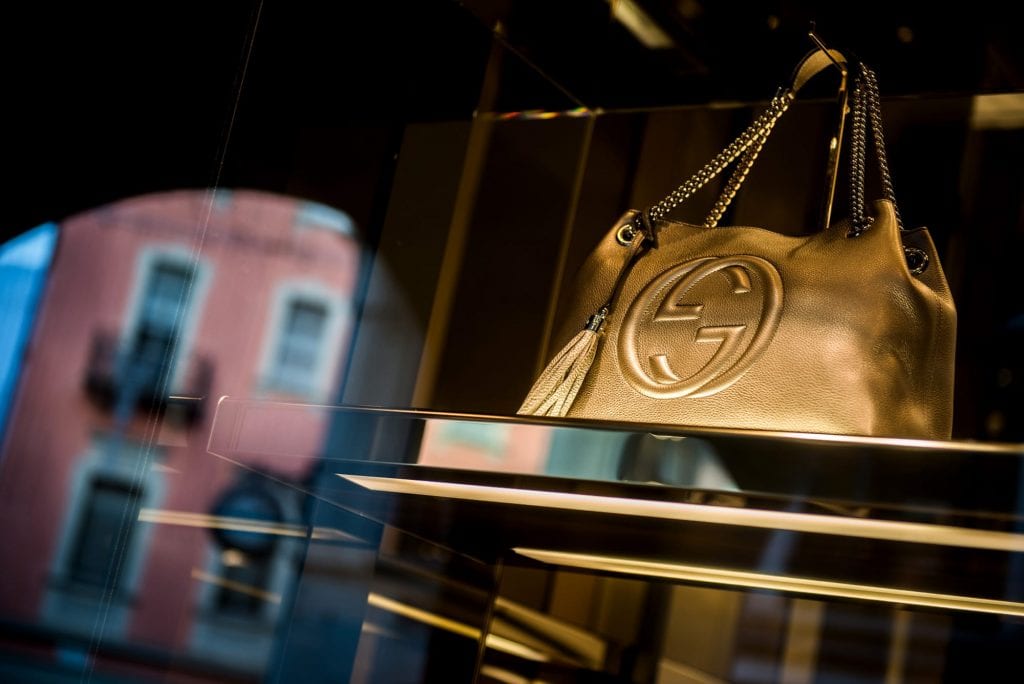
Photo Credit: A gold leather handbag sits in the window display of a Gucci luxury goods store, in Lugano. Gucci is number 39 in Interbrand's Best Global Brands 2018 rankings Akos Stiller / Bloomberg


from Skift https://ift.tt/2R8S2nb
via IFTTT

New Research Report: Digital Advertising Trends in Travel 2018


As consumers continue to turn to digital, and increasingly, mobile channels, for inspiration on the next vacation spot and travel bookings, travel companies’ reliance on digital and mobile platforms to reach these consumers continues to deepen. What’s more, consumer data enabled and enriched by digital channels and technologies makes it possible to connect online and offline consumer activities, map the whole consumer journey, and increase marketing performance of offline campaigns.

Yet, controversies over ad fraud, ad viewability, ad blocking, and data breaches in the past few years have cast some doubt on whether digital is a viable advertising channel.

We explore these themes in our latest Skift Research report publishing Tuesday, Digital Advertising Trends in Travel 2018,

Preview and Purchase

Skift Research conducted a survey asking travel marketing professionals how much they spend on major advertising channels and formats, how effective each channel and format is, and their priorities and goals for 2019. This report draws the key findings of the survey and delves into strategies and tactics that can optimize marketing performance and drive growth.

What you’ll learn from this report:

  • How travel companies allocate marketing budget between paid media, marketing technology, and third-party services and what’s the shift for 2019.
  • What is a typical media mix among travel marketers and how does that compare with other industries.
  • How much travel companies spend on each digital format such as search and social and what’s expected to change in 2019.
  • Marketers’ ratings of ad effectiveness in delivering ROIs for major media channels and formats and strategies to optimize performance.
  • How travel companies structure their digital advertising teams and its impact on multichannel and attribution marketing adoption.
  • Advertising allocation based on customer journey.
  • Top marketing priorities and challenges for 2019.
  • Highlights of marketing and advertising budget variations across different travel sectors and company sizes.
  • Skift’s recommendations on strategic and tactical focuses to optimize ad performance and drive growth.

Subscribe to Skift Research Reports

This is the latest Skift Research report aimed at analyzing the fault lines of disruption in travel. These reports are intended for the busy travel industry decision-maker. Tap into the opinions and insights of our seasoned network of staffers and contributors. More than 200 hours of desk research, data collection, and/or analysis goes into each report.

After you subscribe, you will gain access to our entire vault of reports conducted on topics ranging from technology to marketing strategy to deep dives on key travel brands. Reports are available online in a responsive design format, or you can also buy each report a la carte at a higher price.


from Skift https://ift.tt/2ApGpTp
via IFTTT

The Importance of Consistency

The Skift New Luxury newsletter is our weekly newsletter focused on the business of selling luxury travel, the people and companies creating and selling experiences, emerging trends, and the changing consumer habits around the sector.

What can travel brands learn from other companies in the luxury sector? Quite a lot, judging by Interbrand’s recent global power list.

For whatever reason, travel didn’t get acknowledged, with fashion houses making up most of the luxury entrants. One of those was Hermès of Paris. Robert Chavez, CEO for the Americas who spoke at Skift Global Forum this year, suggested that consistency was the key for luxury travel companies.

It’s a point  worth keeping in mind, especially for those companies either entering the luxury market or struggling in it. In this week’s newsletter we have examples of both.

First up, Switzerland-based MSC Cruises is building four new “ultra-luxury” vessels on the back of the success of its ship-within-a-ship luxury concept MSC Yacht Club.

Then there’s further revelations of Accor’s struggles within its high-end vacation rental and concierge businesses. The problems seem to stem from integration and expansion problems. Perhaps Accor just wasn’t consistent enough?

For feedback or news tips, reach out via email at pw@skift.com or tweet me @paddywhyte.

— Patrick Whyte, Europe Editor

8 Looks at Luxury

Photo Credit: A pedestrian walks past a Hermes store in London. What can fashion retailers teach hospitality companies? Simon Dawson / Bloomberg


from Skift https://ift.tt/2CAA1Kt
via IFTTT

New Skift Report: European Hospitality’s Creative Renaissance


We’re publishing a new Skift Trend Report in partnership with AccorHotels: European Hospitality’s Creative Renaissance, that takes a close look at the current innovation happening in European hospitality.

Get the report

Nothing exemplifies the stereotype of the European travel experience better than the 20th-century version of the 19th-century Grand Tour. Mid-century international travelers would typically head to the continent for a typical two-week motorcoach tour, visiting Paris, London, Rome, and other capital cities while staying at boring, standardized hotels.

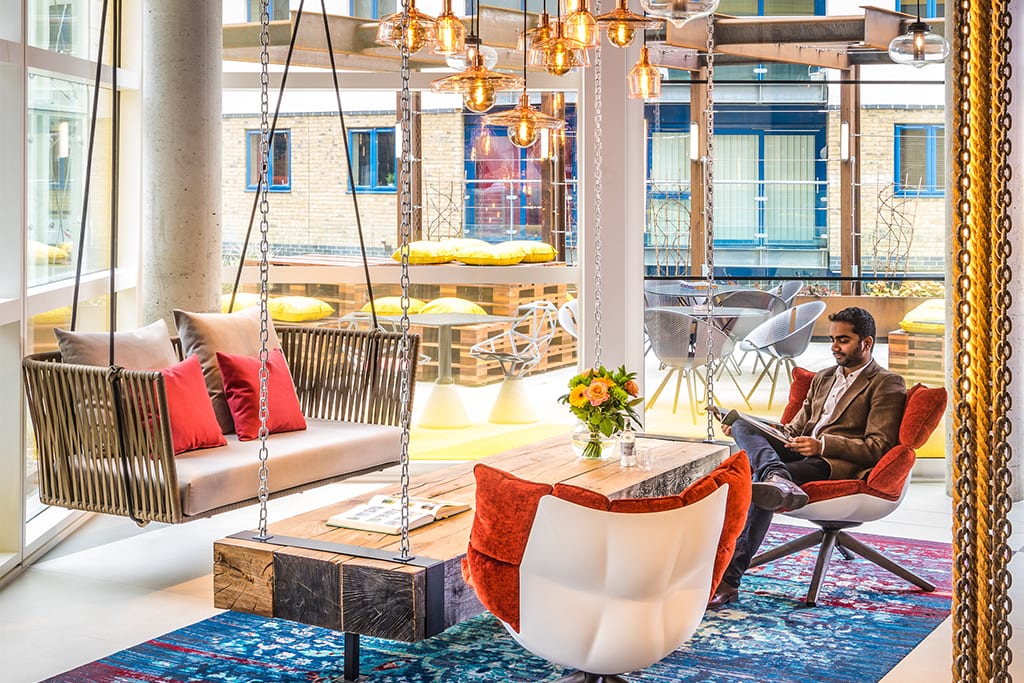
But just as there’s been a sea change in how travelers visit Europe, there’s been a huge wave of innovation coming out of the continent’s hospitality industry. The days of having to choose between either grande dame hotels or boring budget beds are over, replaced by a plethora of niche lodging options that feature cutting-edge design, community-driven approaches, and contemporary food and beverage concepts.

While most hotel brands are laser-focused on expanding in developing countries in Asia, Africa, the Middle East, and South America, this report shows that they should also be paying attention to what is unfolding in Europe. As the most mature hospitality market, Europe’s appetite for the avant-garde is constantly evolving, so the continent may well be the prime spot for industry innovation.

This report provides:

  • An overall picture of Europe’s current hospitality landscape
  • A look at how European hotel brands are taking new approaches to design, staffing, and food and beverage
  • A focus on how legacy brands are reinventing to keep up with new competition
  • Deep dives into Jo&Joe and Mama Shelter’s approaches to hospitality today

Get the report

This content was created collaboratively by AccorHotels and Skift’s branded content studio, SkiftX.


from Skift https://ift.tt/2PZ47eJ
via IFTTT